

Every small business owner picks up the phone dozens of times a day. Many still rely on a personal cell number for calls that should stay separate from work. That single choice affects privacy, growth, and how professional a business looks to callers.
VoIP and cell phones seem similar at first glance. Both let you make and receive calls from a smartphone. The similarities end there. A cell phone gives you one line tied to one device. A VoIP system builds an entire office phone network on top of that same device.
The Real Difference Between a Cell Phone and a VoIP Line
A standard cell phone connects through the cellular voice network. It ties your number to a single SIM card and a single physical device.
VoIP works differently. Calls travel over an internet connection, using either Wi-Fi or cellular data. That connection allows a VoIP number to run as software rather than hardware. Employees can log into the same business line from a phone, a laptop, or a tablet.
Why That Distinction Matters for Growing Businesses
A cell phone number moves with one person. A VoIP number moves with the business itself. That difference becomes obvious the moment a company adds a second employee.
Why Keeping Your Personal Number Private Matters
Handing out a personal cell number creates problems down the road. Clients start calling nights, weekends, and holidays, with no separation between work and home life.
A dedicated business number solves that problem directly. VoIP gives owners a separate number and separate texting, both running through an app on their existing phone. Nothing new to carry, nothing new to charge.
That separation protects personal time. It also builds a more polished image for a business that plans to grow.
Scaling a Team Without Buying New Phones
Hiring used to mean buying another line and another physical handset for every new employee. That approach gets expensive fast, and it slows down onboarding at the worst possible time.
VoIP removes that friction. Adding a new hire means adding a user to an existing system, not shopping for hardware. Several staff members can share one main business line at once. Everyone assigned to that line can view messages and calls, unlike a personal cell phone only one person can check.
Professional Call Handling a Cell Phone Cannot Offer
Standard cell phones handle one thing well: simple point-to-point calls. They cannot route a caller to the right department or greet them with a custom recording.
VoIP systems include automated attendants that direct callers using simple menu options. Business hours can trigger automatic voicemail the moment the office closes for the day. For a closer look at these tools, our post on call routing, voicemail, and after-hours features walks through exactly how they work.
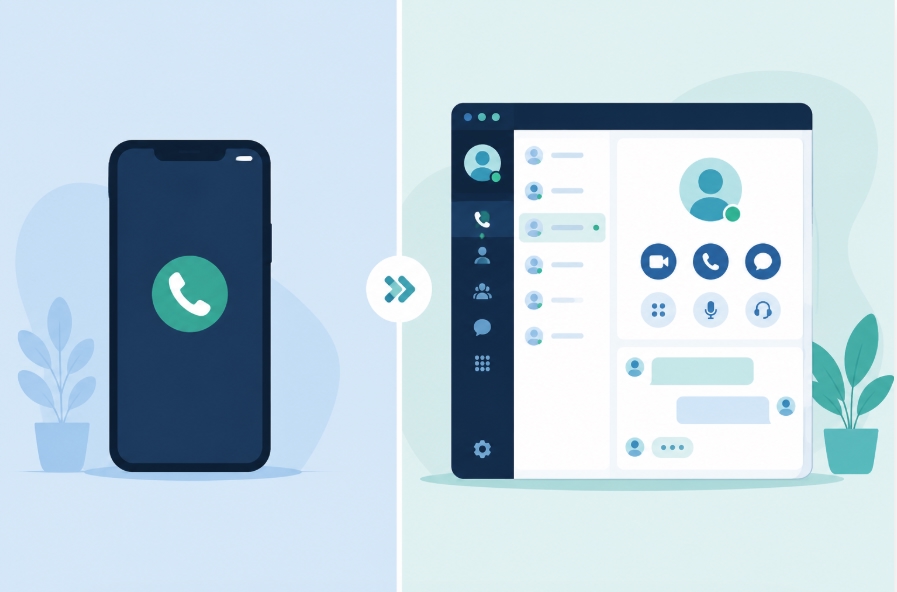
One Number Across Every Device
A cell phone number lives on one SIM card, inside one pocket. If that device is off or out of range, calls go straight to a generic voicemail box.
VoIP numbers are not tied to a single device. Staff can answer business calls from a phone, a laptop, or a tablet, all at the same time. A missed call on one device doesn’t mean a missed opportunity for the business.
Comparing the Two Options Side by Side
| Feature | VoIP Business System | Standard Cell Phone |
|---|---|---|
| Primary connection | Wi-Fi or cellular data | Cellular voice network |
| Business identity | Separate business number and caller ID | Uses your personal number |
| After-hours handling | Sends calls to voicemail automatically | Requires manually silencing the phone |
| Shared access | Multiple employees can view calls and texts | Only the device holder sees messages |
| Hardware required | None, works on an existing smartphone | A dedicated physical phone |
How to Choose the Right Fit
When a Cell Phone Still Works
A solo operator with minimal client contact might not need more than a personal line. If sharing a personal number raises no concerns, and calls stay simple, a basic cell line can still get the job done.
When VoIP Makes More Sense
Most growing businesses outgrow a single personal line fairly quickly. Owners who want a professional image, shared team access, and room to add staff tend to move toward VoIP instead. The setup runs on hardware most teams already own, including desktop softphones and mobile apps, and can extend to desk phones and equipment listed on our products page as a business scales further.
Setting Up the Right System for Your Business
Small businesses across Ocean and Monmouth County are moving away from personal cell lines and toward dedicated VoIP systems. The switch usually takes less time than owners expect, and it rarely disrupts daily operations.
AmeriTel has helped local companies set up systems that fit their teams, from solo practices to growing offices with several locations. Free installation, training, and support come standard with every plan. Details on available features and pricing are available on our VoIP solutions page.